Where can I buy Japanese Cosplay Statues?
Where can I buy Japanese Cosplay Statues? and anime figures at affordable prices. Explore unique collectibles, including small Japanese statues Cheap? Japan
FASHION
KEY TAKEAWAYS
Where can I buy Japanese statues?
Where can I buy Japanese Cosplay Statues Cheap?
Where can I get Japanese cosplay icons?
Can I buy Japanese anime statues from Japan?
Small Japanese statues from Tokyo Japan
Free shipping of Japanese cosplay statues!
I didn’t come to Japan looking for dragon ladies
Daniel TJ International Correspondent Tokyo, Japan
That sounds strange already, I know. What I mean is, I wasn’t hunting collectibles, or figures, or statues, or anything like that.
I came here the way a lot of foreigners do. Curiosity first. Then food. Then trains. Then suddenly it’s been years and your apartment has more character than space.
But somewhere along the way, usually after my third or fourth lap through a side street in Akihabara or a quiet artisan shop in Kyoto, I started noticing them. The statues.
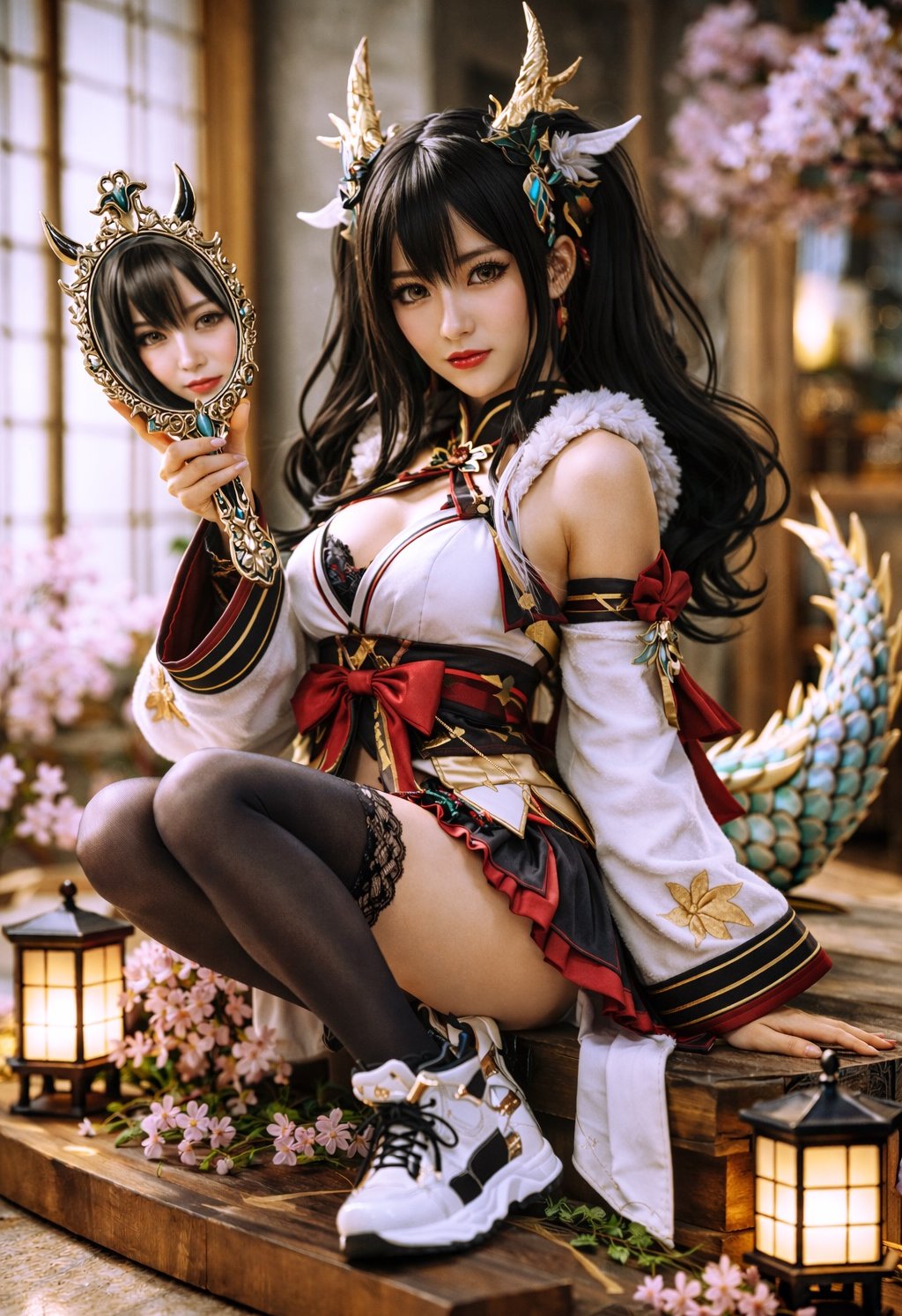
The dragon girls. Not monsters, not fantasy creatures in the Western sense. These were… softer. Thoughtful. Sometimes playful. Sometimes calm.
Always carefully dressed in cosplay outfits that felt very Japanese, but also very modern.
And that’s when it clicked for me. These weren’t souvenirs. They weren’t toys either. They were something in between art, pop culture, and personal taste.
And you can only really buy them here. Let me try to explain.
In Japan, dragons are not the aggressive, gold-hoarding beasts I grew up with back home. They’re closer to guardians. Old wisdom. Weather. Balance. There’s a gentleness to them, even when they’re powerful.
When Japanese artists reinterpret dragons as women or girls—adult characters, to be clear—it often comes with that same mix of strength and softness.
You’ll see horns tucked into hairstyles, scales woven subtly into clothing patterns, tails that curve like calligraphy strokes instead of weapons.
Now add cosplay...
Not cosplay like a convention costume that screams for attention, but thoughtful cosplay. Shrine maiden outfits reimagined with dragon motifs. Street-fashion jackets layered over traditional silhouettes.
Sometimes a hoodie with embroidered scales. Sometimes a kimono that feels slightly futuristic, like it belongs five minutes into the future instead of five hundred years in the past.
The first one I ever bought was in a tiny shop near Nakano. I hadn’t planned on buying anything. I was just killing time, honestly.
The shop owner didn’t speak much English, and my Japanese was… well, enthusiastic but flawed. We nodded a lot. Smiled. I picked up this statue maybe 25 centimeters tall.
A dragon lady sitting casually, one knee up, wearing what looked like a modern festival outfit. Sneakers. Yes, sneakers. Tiny sculpted laces and all.
I remember thinking, “Why does this feel so… real?”
Not realistic like a photograph, but emotionally real. Like someone the artist knew. Or had watched on a train once.
The face wasn’t perfect. That mattered. Slight asymmetry. A relaxed expression. Not posing for anyone.
That’s a big thing with these statues. They don’t feel like they’re trying to impress you.
A lot of global shoppers, especially men, get interested in Japanese figures because of polish or idealization.
These dragon cosplay statues go in another direction. They feel lived-in. Casual. Confident in a quiet way. They’re collectible, yes, but they’re also personal. You don’t just put them on a shelf to show off.
You put them somewhere you’ll notice on a normal Tuesday night.
And here’s the thing: almost all of the best ones are Japan-only.
Sometimes that’s licensing. Sometimes it’s production scale. Often it’s just because the artist sells through local events, boutique stores, or limited-run exhibitions.
You won’t find them on big global marketplaces, and if you do, the prices are… let’s say ambitious.
I once talked to an artist at a small design fair in Yokohama. He told me he didn’t want his work exported widely.
Not because he disliked foreigners—clearly not, since I was standing there asking clumsy questions—but because he wanted people to encounter the statue the same way he imagined it. In a quiet space. In person.
Where you could walk around it. See how the light hits the paint.
That stuck with me.
These statues are usually made from high-grade resin or PVC, sometimes mixed with hand-painted elements. The paintwork is where the magic lives.
Subtle gradients on the scales. Fabric textures that almost trick your fingers. You’ll see matte finishes paired with glossy accents, which sounds small, but it changes everything.
Emotionally, too, they land differently depending on where you see them. In Tokyo, they feel urban and cool. In Kyoto, somehow more spiritual.
In Osaka, a little playful. I know that sounds like projection—and maybe it is—but I’ve seen enough of them now to feel like place matters.
I’ve also noticed how often Japanese collectors don’t talk about them loudly. There’s no bravado.
No “look what I own.” It’s more like, “Ah, you noticed her.” That’s it. End of conversation. Almost like introducing a friend.
As a foreigner, that taught me something about Japanese pop art culture. It’s not always about fandom or hype.
Sometimes it’s about resonance. You don’t need to justify why you like a piece. You just do.
For men who collect these statues, especially international buyers, I think part of the appeal is that they represent a version of femininity that isn’t asking for anything.
Not attention. Not validation. Just presence. Strong, calm, occasionally playful. Modern, but rooted.
And dragons… well, dragons are timeless.
One night, I had a friend over—another expat—and he noticed the statue on my shelf. He didn’t ask where I bought it. He asked who she was.
That question felt right.
Because these statues aren’t characters with lore you need to memorize. They’re moments. Personal interpretations. A feeling an artist had and decided to freeze.
You can’t really rush into buying one. The best ones find you. You turn a corner, step into a shop you didn’t plan to enter, and suddenly there she is.
And you stand there longer than you expected, thinking about whether she belongs in your life.
Sometimes the answer is no. Sometimes it’s yes and you carry her home on a crowded train, holding the box carefully like it’s fragile, even though it’s not.
That’s Japan for you. Even the collectibles teach you patience.
So if you’re a global shopper thinking about these dragon lady cosplay statues, know this: you’re not just buying an object.
You’re buying a small, very Japanese way of seeing strength, beauty, and modern identity all at once. And you can’t fully get that through a screen.
You have to be here. At least once.
We will add more images of these Japanese Cosplay Statues soon. Our new collection just came in this year. So, please bookmark us!
HAVE YOU SEEN THIS? Is it easy to get a job in Japan?
For questions or comments, please send a message utilizing the form below [or] sign up for free Newsletters about Global Jobs Available, How to become a member, Japanese Fashion, Food, Politics, Travel, Hotels, Health, Culture, Things to To In Japan, Photography & More!
Savvy Japan: Today © 2026
Always Do Good
Tel: 070.9041.6946